The Morning That Explained Everything
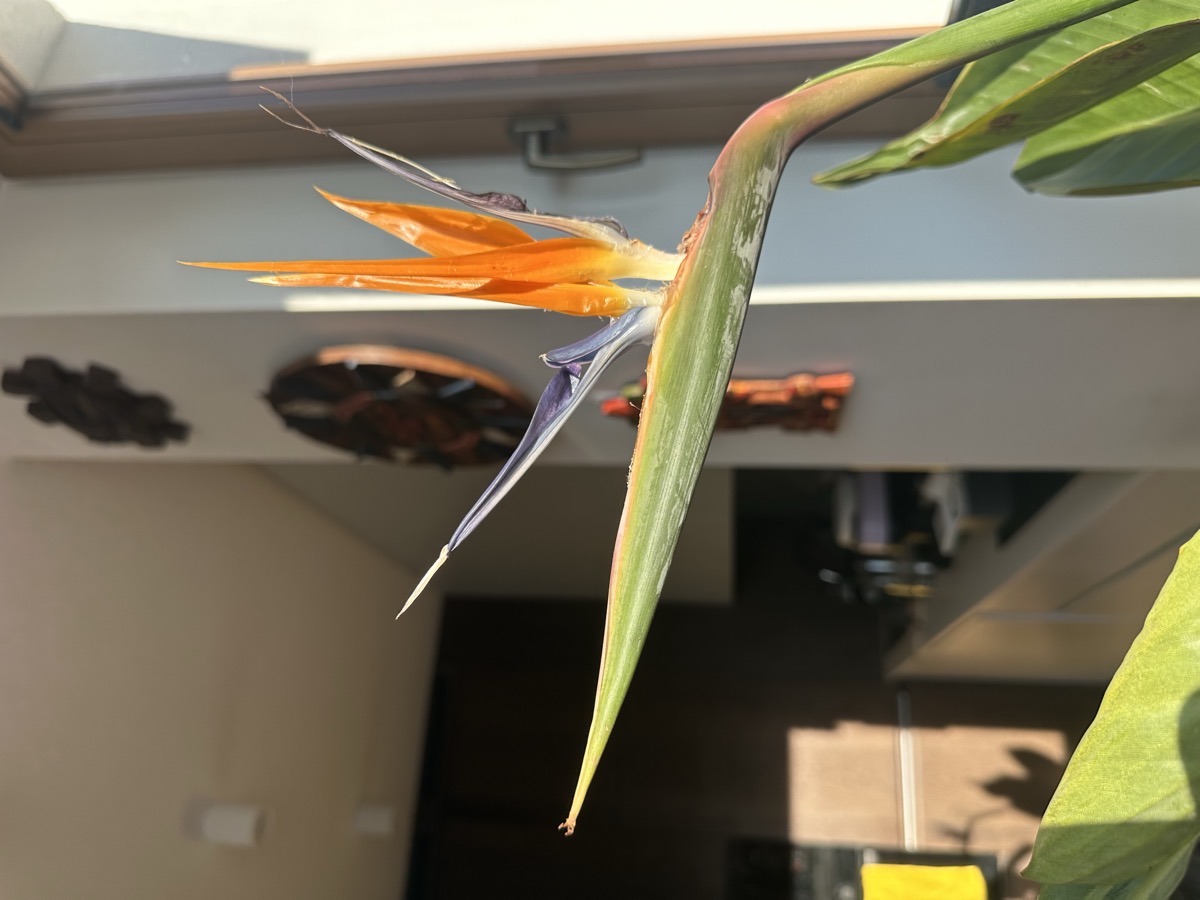
It's 7:14 AM on a Tuesday in April. I'm standing on my balcony in Warsaw with coffee, looking at a Bird of Paradise that bloomed overnight.
The orange and blue-purple flower — a Strelitzia, the jungle plant I always wanted — opened while I was sleeping. It looks like a tropical bird turned into a plant. Or a plant pretending to be a bird. Or something from a fantasy world that happens to exist in real life.
And I'm thinking about two things at once.
The first: this flower is beautiful and I want to photograph it.
The second: yesterday I documented the twenty-eighth city in a fictional world using three AI tools, and I did most of the creative work while planting petunias.
These two thoughts are not separate. They are the same thought.
The Discovery: Environment Is Part of the System
Over the past week I built something I wasn't expecting. Not just cities and characters and lore — I built a creative system that includes my physical environment as a functional component.
Here's what I mean.
Most articles about AI productivity describe workflows like this:
"Open ChatGPT. Write a prompt. Get output. Iterate."
That is the mechanical version. It works. It produces results. But it produces results the way a treadmill produces movement — technically correct, spiritually empty.
What I discovered — by accident, while gardening — is that the best AI-assisted creative work happens when the whole system is active:
When all three layers are active simultaneously — body doing something physical, mind generating ideas through voice, AI catching and structuring the output — the quality of creative work is dramatically higher than when I sit at a desk and type prompts.
This is not mystical. It is neuroscience.
Why This Works (The Science Part)
The brain does its best associative thinking when:
-
The body is occupied with low-cognitive-load physical tasks — gardening, walking, showering, cooking. These activities engage the motor cortex without demanding executive attention, freeing the default mode network for creative synthesis.
-
The environment provides sensory richness — plants, natural light, moving air, organic textures. Sensory diversity keeps the brain in a state of relaxed alertness rather than the tunnel-focus of screen-based work.
-
Ideas are externalized through voice — speaking activates different neural pathways than typing. Voice-to-AI conversation feels more like thinking out loud than writing, which lowers the self-editing barrier and lets raw ideas emerge.
-
An external system catches and holds the output — this is where AI changes everything. Without AI, the ideas generated during a walk or a gardening session evaporate. With AI, they are captured, structured, validated against existing work, and stored permanently.

What One Week Produced (The Evidence)
This is not theory. Here are the numbers from the past five days of working in this system:
Every major creative breakthrough of the past week happened during physical activity:
- Amaran Tharyn (a new character) was conceived while making morning coffee
- The fossil-god revelation (civilizations built on dead gods' bones) emerged while spreading pine mulch
- The Caelnyxia Split (the saga's endgame architecture) crystallized while planting strawberries
- The attention hook discovery (catching AI errors) happened while reviewing maps between watering sessions
- Izabelle Dubuaz (pirate character) was designed while walking to the barber
None of these happened at a desk. All of them were captured by AI.
The Four Use Cases of AI-Assisted Cognition
Looking at the past week, I can identify four distinct ways AI interacted with my thinking process:
1. Cognitive Journaling — I talk to AI by voice while doing other things. The AI captures, organizes, and reflects my thinking back to me in structured form. This is not "using a tool." It is thinking out loud with a partner that never forgets.
2. Context Synthesis — My brain jumps between topics: plants, AI, travel, personal reflection, website architecture, fantasy worldbuilding. Instead of forcing linear thinking, AI stitches the parallel threads together. For people with associative cognitive styles, this is transformative.
3. Embodied Grounding — Physical activity regulates cognitive output. Coffee, plants, movement, fresh air. The body stabilizes what the mind generates. Without it, AI work becomes untethered — fast but shallow. With it, the ideas carry weight.
4. Knowledge Translation — AI helps bridge the gap between complex internal knowledge and clear external expression. I know things about prompt engineering, cybersecurity, worldbuilding, and creative process that are hard to articulate from scratch. AI helps me translate that expertise into articles, docs, and shareable content.
The Balcony as Cognitive Architecture
This is the part that surprised me most.
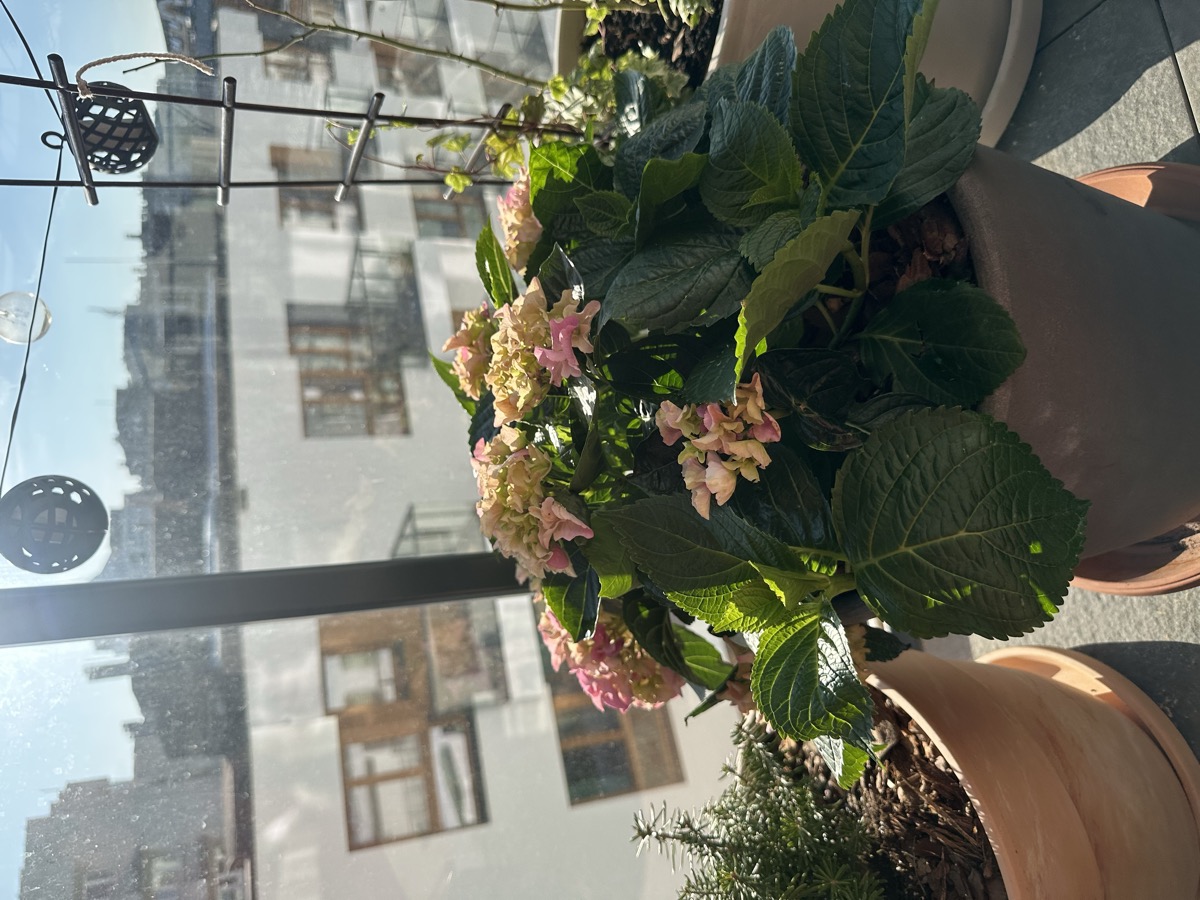
I didn't plan my balcony as a creative workspace. I planted petunias because I like flowers. I bought a Bird of Paradise because I always wanted one. I arranged the planters because it looked good.
But what I accidentally built was a cognitive architecture:

- Layered visual depth — foreground (flowers), midground (furniture), background (Warsaw skyline). The eye moves through three spatial layers, which automatically creates calm and focus.
- Living textures — organic shapes, natural colors, moving leaves. Sensory diversity that keeps the brain in relaxed alertness.
- Temperature and air — the transition from indoor screen-light to outdoor fresh air resets cognitive state. Every time I step onto the balcony, my brain shifts gears.
- Growing things — plants that change, bloom, respond to care. A living system that rewards attention over time. This mirrors creative work itself.
The result: when I sit on the balcony with coffee and talk to AI about a fictional continent, the ideas that emerge are different — richer, more grounded, more connected to physical reality — than the ideas I generate sitting at a desk.
What This Means for AI-Assisted Work
The AI productivity industry focuses almost exclusively on prompts, tools, and workflows. That's important. But it misses something fundamental:
The environment in which you use AI matters as much as the AI itself.
A well-crafted prompt in a sterile room produces correct output.
A half-formed thought spoken out loud on a balcony full of living plants produces something alive.
The difference is not the AI. The AI is the same in both cases. The difference is the human — and the human works differently depending on whether they are surrounded by screens or by living things.
AI as a Learning Accelerator (Not a Replacement)
There's one more use case that emerged this week, and it's the one that surprised me most.
I built my entire balcony garden with zero prior gardening experience. I started with essentially nothing — no knowledge of soil types, sun exposure, watering schedules, or which plants can coexist. Normally, learning plants works like this: buy a plant, watch it struggle, research why, adjust, repeat over months or years.
Instead, I compressed that entire cycle. I asked AI questions in real time while my hands were in the soil:
"Does this plant like sun or shade?" "How often should I water it?" "Can these two plants coexist in the same container?" "Why are the leaves yellowing?"
AI became a translation layer between expert horticulture knowledge and my immediate situation. Instead of guessing, I was making informed micro-decisions.
But here's the critical part: AI cannot feel soil moisture. It cannot observe subtle leaf texture changes. It cannot notice how sunlight moves across my specific balcony throughout the day. It cannot smell root rot or judge wind exposure between buildings.
Those are human sensory skills. And I developed them myself — through attention, observation, and the kind of physical intuition that comes from caring about something alive.
AI accelerated the theory. I built the intuition myself.
The result: a thriving balcony garden with healthy leaves, vibrant colors, new growth, and a Bird of Paradise that bloomed — which only happens when the plant receives good light and stable care over time.
This is the use case that matters most to me. Not "AI replaced the gardener." But: AI lowered the barrier to learning a new domain. It let me explore something I'd never tried before with confidence instead of guesswork. The learning was real. The skills are mine. The AI just made the conversation between "knowing nothing" and "knowing enough" much faster.
A Small Manifesto
Here is what I believe after a week of building worlds between a Bird of Paradise and a cup of coffee:
AI does not replace the human. Everyone says this. Few people show what it actually means.
What it means is: the human brings everything the AI cannot — physical sensation, emotional context, aesthetic judgment, the smell of pine mulch, the weight of soil in your hands, the decision that a character should be named "Robert" because simplicity is freedom.
AI brings what the human cannot — perfect memory across 40 months of lore, structural validation, infinite patience, the ability to hold every thread simultaneously.
Together, in the right environment, they produce something neither could alone.
That environment is not a productivity hack. It is part of the creative system.
Build your balcony. Plant your flowers. Let the Bird of Paradise bloom while you build worlds.
The AI will hold the threads. You hold the truth. And the living things around you will keep both honest.
The Ethereal Web is a tetralogy by George M. J. Zak. Tome I — Thomas the Azure Light — is in final preparation for release. Follow the journey at theetherealweb.com.