How It Started
I didn't design a methodology. I noticed I was already using one.
Every morning for the past week — while building a fictional world with 28 cities, 30+ characters, and a four-book saga — I followed the same pattern without realizing it:
- I looked at something real (a plant, the skyline, coffee steam)
- I started talking (to ChatGPT, by voice, while my hands were busy)
- AI expanded what I said (structured it, connected it, challenged it)
- My body stayed grounded (planting, walking, watering, arranging)
- Something concrete emerged (a character, a city doc, an article, a decision)
This happened every single day. The outputs were extraordinary. And I wasn't tired at the end — I was energized.
That's when I realized: this isn't random productivity. This is a cognitive system — and it works specifically because of how my brain is wired.
The ADHD Connection
I have ADHD. My brain does not move in straight lines.
It moves like this:
plant → biology → balcony design → mental health → AI → website architecture → teaching → travel → writing → back to plants
From the outside, this looks chaotic. From the inside, it feels like everything is connected and the connections are moving faster than I can write them down.
That speed is the gift. The problem has always been: the ideas move faster than the ability to capture them.
Before AI, that meant lost ideas, fragmented notes, and the frustration of knowing you had something brilliant at 7 AM but can't remember what it was by noon.
Now something different happens.
Instead of fighting associative thinking, I externalize it. I speak freely — jumping between topics, following connections, letting the brain do what it does. And AI becomes a cognitive buffer that holds every thread until I'm ready to weave them together.
My thinking stays natural. The AI adds structure. The result is faster than either could produce alone.
The Five Steps
Step 1 — OBSERVE (Reality First)
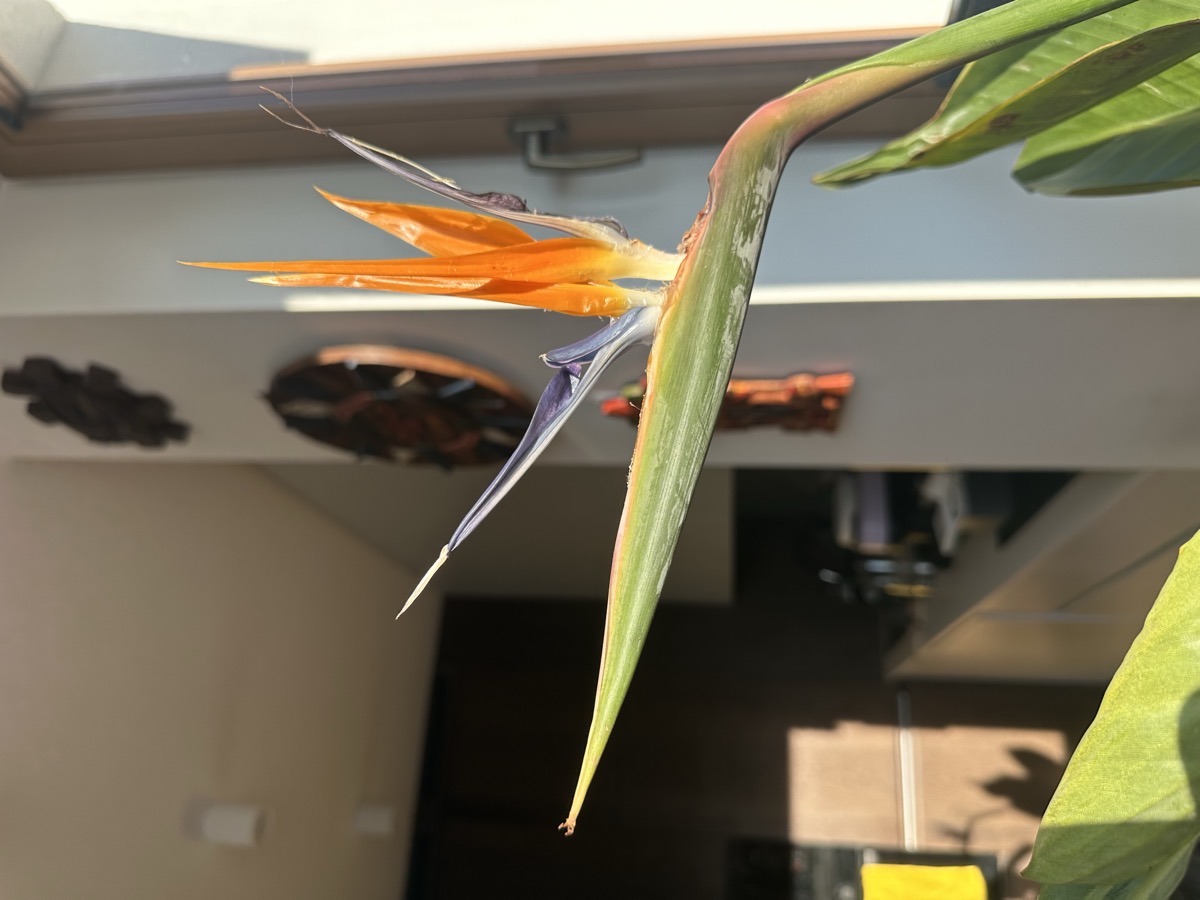
Don't start with a task list. Don't open the laptop first. Start with observation.
Look at something physical. A plant. The weather. Coffee steam. The city from your window.
This activates the default mode network — the brain's reflective, creative state. The same state that Darwin used walking his garden, that Einstein used on long walks, that every writer uses staring out a window.
Observation is the spark. Everything else follows from it.
Step 2 — SPEAK (Think Out Loud)
Open a voice conversation with AI. Don't type — talk.
Speaking activates different neural pathways than typing. It feels more like thinking than writing, which lowers the self-editing barrier and lets raw ideas emerge.
This is where ADHD becomes a superpower. The associative jumps — plant to biology to AI to website to teaching — are not bugs. They are the raw material. Let them happen. Let the AI catch them.
The AI is not judging your flow. It is holding it until you're ready to shape it.
Step 3 — EXPAND (AI Amplifies)
This is where AI changes the game.
A traditional conversation partner can hold maybe 30 minutes of context. AI holds everything — 40 months of worldbuilding, every decision you've made, every name you've chosen, every map you've drawn.
When you say something that connects to something from six months ago, AI sees the connection. When you describe a scene that contradicts something you wrote last year, AI catches it. When you generate an idea that is better than you realize, AI preserves it.

This is cognitive amplification, not automation. AI does not think for you. It amplifies the thinking you're already doing — expanding connections, validating against history, structuring the chaos into something usable.
Step 4 — GROUND (Body + Nature)
This is the step most AI productivity systems skip. It is the most important one.
While thinking and talking, your body should be doing something physical. Not exercise — something organic. Planting. Watering. Arranging objects. Walking. Cooking.
Why? Because without physical grounding, AI-assisted thinking becomes untethered. Fast but shallow. Correct but lifeless.
Plants move at biological time. Water cycles, leaf growth, flowering rhythms. Your nervous system unconsciously synchronizes with those patterns. That creates mental regulation — the stability that lets associative thinking produce depth instead of scatter.
The balcony is not where I take breaks from work. The balcony is where the work happens best.

Step 5 — CREATE (Structure the Output)
The final step: take what emerged and make something from it.
An article. A character profile. A city document. A business plan. A training deck. A decision.
The raw material from Steps 1-4 is rich but unstructured. Step 5 is where AI's structural capability shines: turning voice conversations into documents, organizing associative ideas into frameworks, producing deliverables that would have taken days to write manually.

The Proof — What This Method Produced in 5 Days
Every major creative breakthrough came during physical activity. The method wasn't applied to the work — the method was the work.
Why This Works for ADHD Specifically
Traditional productivity systems — Pomodoro, GTD, time-blocking — are designed for linear thinkers. They assume the brain moves in one direction and needs structure to stay on track.
ADHD brains don't work that way. They move in parallel streams, making connections between unrelated domains simultaneously. The standard advice is: "focus on one thing at a time." For an ADHD brain, that's like telling a river to flow in a straight line.
The Cognitive Garden Method works because it uses the associative flow instead of fighting it:
- Observation catches the ADHD brain in its natural exploratory state
- Speaking lets associative jumps happen without the friction of typing
- AI expansion ensures nothing is lost, no matter how fast the jumps come
- Grounding prevents the mental scatter that ADHD can produce without physical anchoring
- Creation channels the accumulated material into concrete output
The ADHD brain is not broken. It is a parallel processor in a world designed for serial processors. This method gives it the right interface.
Three Narrative Structures This Method Produced
The Reflective AI Loop didn't just produce documentation. It produced narrative architecture — story structures that an independent AI review identified as comparable to techniques used by Tolkien, Sanderson, and the Witcher world design.
None of these structures were planned on a whiteboard. They emerged from the loop: observe, speak, expand, ground, create. The ADHD brain made the connections. The AI caught them. The balcony kept everything grounded.
Beyond Worldbuilding — Where This Applies
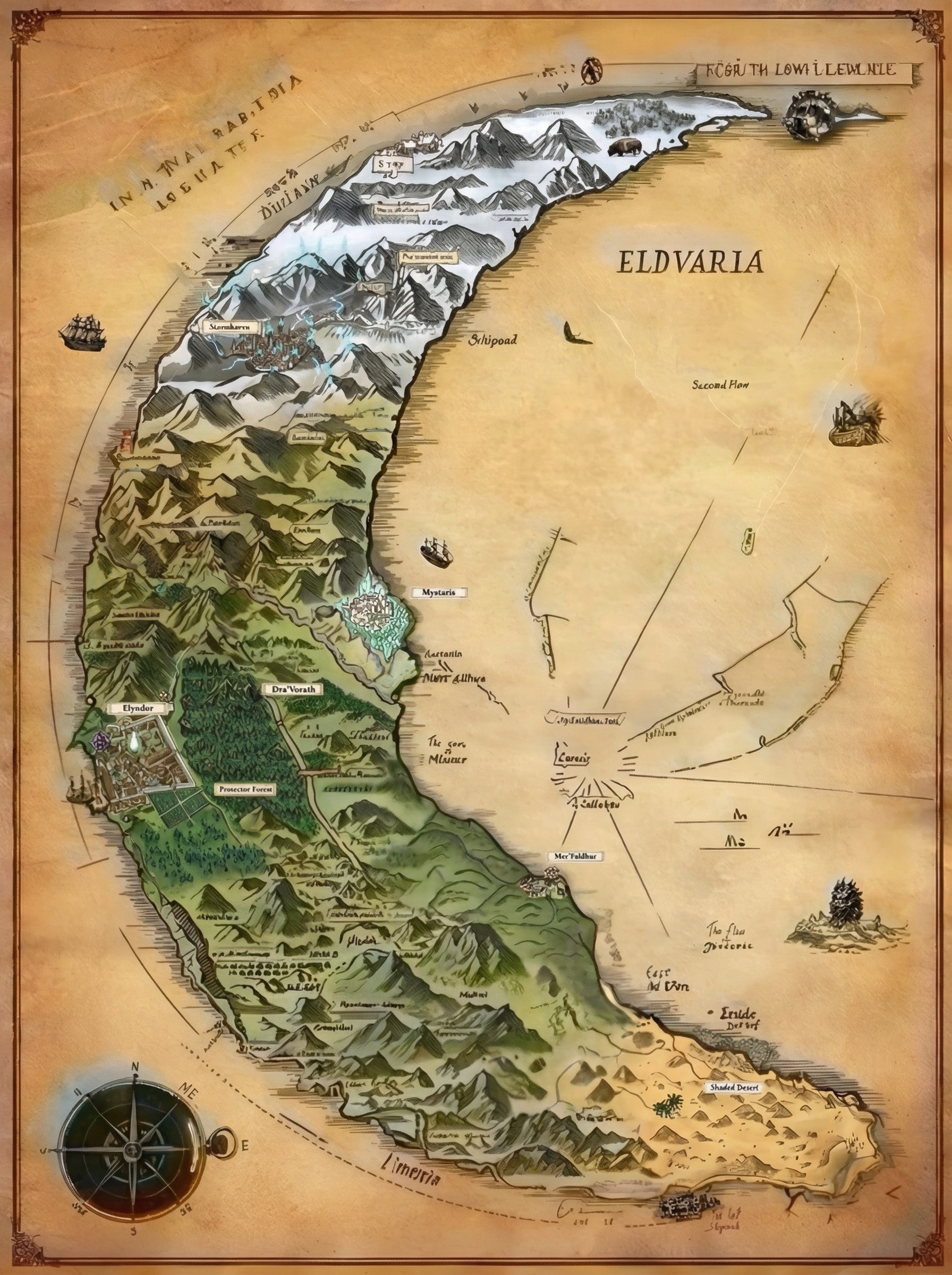
I discovered this method through fantasy worldbuilding. But the framework is universal:
| Domain | How it works |
|---|---|
| AI Training & Consulting | Observe client needs → speak through ideas → AI structures training decks → ground in real examples → deliver workshops |
| Prompt Engineering | Observe model behavior → speak through patterns → AI documents techniques → test with real prompts → publish guides |
| Cybersecurity | Observe threat landscape → speak through scenarios → AI maps attack surfaces → ground in case studies → deliver assessments |
| Content Creation | Observe the world → speak through ideas → AI drafts articles → ground with photos and examples → publish |
| Change Management | Observe resistance patterns → speak through strategies → AI structures frameworks → ground in organizational reality → execute |
The method is not about fantasy. It is about how humans think best when AI is part of the loop — and how physical environment stabilizes that thinking.
The Name
I call it The Reflective AI Loop — because that's what it actually is. A loop of reflection, amplification, and creation that repeats daily and compounds over time.
Also known as The Cognitive Garden Method — because both words in the alias matter too:
Cognitive — it is a thinking framework, not a productivity hack. It works with how the brain actually functions, not how we wish it would.
Garden — it requires living things. Not metaphorically. The physical environment — plants, light, air, organic textures — is a functional component of the system, not a nice-to-have.
You can use it with a balcony full of petunias. You can use it with a single plant on a windowsill. You can use it walking through a park.
But you cannot use it in a sterile room staring at a screen. The garden is not optional.

Try It Tomorrow Morning
- Make coffee. Don't open the laptop yet.
- Look at something alive. A plant. The sky. Anything that isn't a screen.
- Open a voice conversation with AI. Say what's on your mind. Don't filter. Don't structure. Just talk.
- Do something with your hands. Water a plant. Organize a shelf. Walk to the window.
- After 20 minutes, ask the AI: "What did I just say that's worth keeping?"
That question — "what's worth keeping?" — is the bridge between flow and output.
The AI will tell you. And you'll be surprised how much you generated without realizing it.
That's The Reflective AI Loop.
It starts with coffee and a plant.
It ends with something you didn't know you were building.
The Ethereal Web is a tetralogy by George M. J. Zak, built entirely using this method. 28 cities. 30+ characters. 6 continents. A world that grew on a balcony in Warsaw. Follow the journey at theetherealweb.com.